
QUICK ANSWER
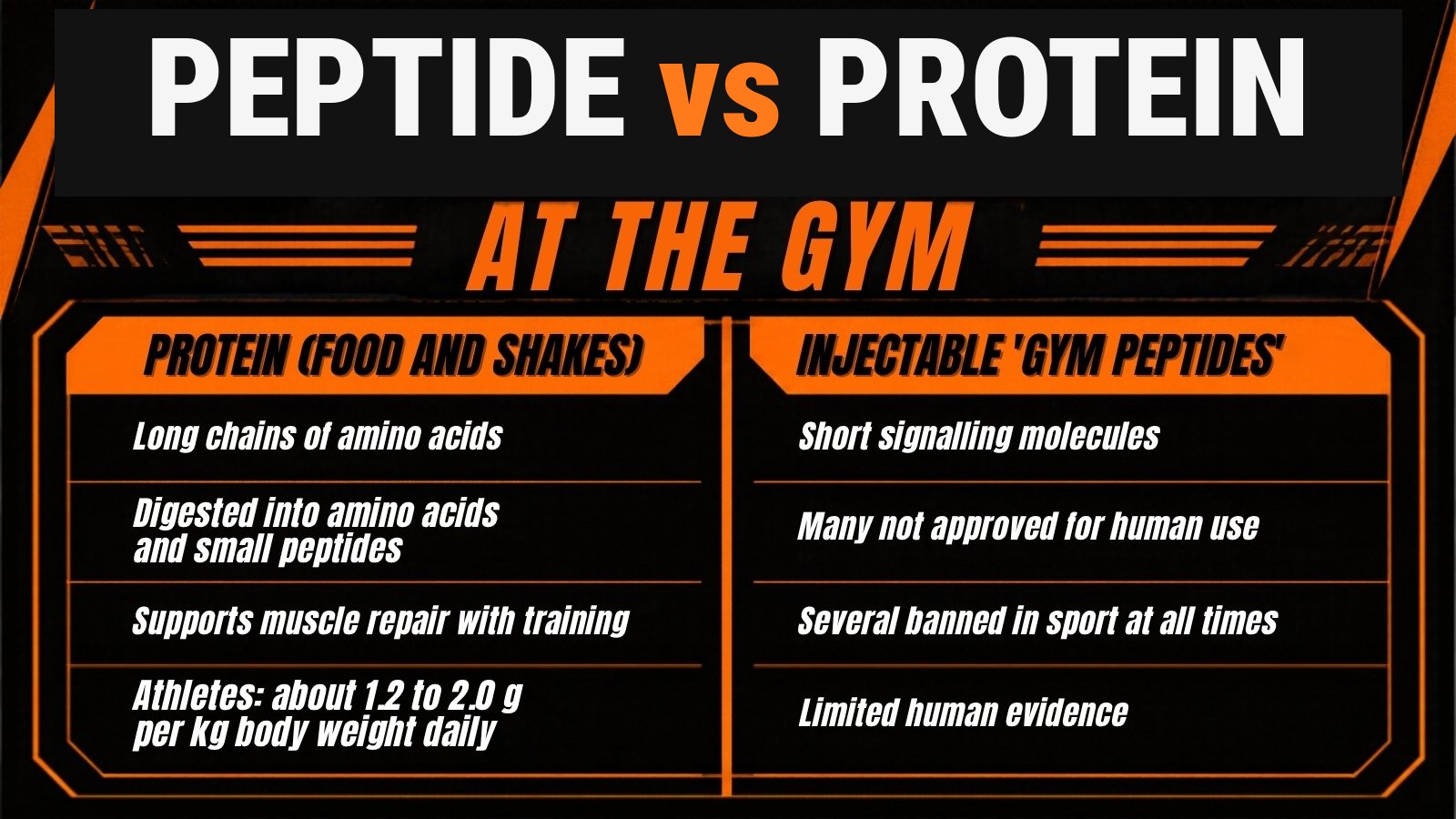
Peptide vs protein comes down to size and job. Proteins are long amino acid chains you eat to build and repair muscle; peptides are short chains, some of which act as signalling molecules. For gym-goers, dietary protein has strong evidence behind it. Many injectable “gym peptides,” by contrast, are not approved for human use, have limited human evidence, and several are banned in sport at all times.
Walk into almost any gym and you will hear both words thrown around. Protein shakes on one side of the locker room, talk of “peptides” for recovery and fat loss on the other. Some people assume peptides are just a more advanced form of protein. Others think of them as a legal shortcut. Neither is quite right.
This guide is written for people who train. We will explain the peptide vs protein difference in plain terms, what protein actually does for muscle, how much you need, where peptides show up in supplements you already use, what the popular injectable “gym peptides” really are, and the regulatory and anti-doping rules every athlete should know before trying anything new.
Peptide vs Protein: The Basic Difference
Both peptides and proteins are made from amino acids linked together in chains. The main difference is length. Peptides are short chains, typically from two to around fifty amino acids. Proteins are longer chains, often hundreds of amino acids, that fold into complex three-dimensional shapes.
That size difference leads to a difference in function. Proteins do a huge range of structural and functional jobs: muscle fibres, enzymes, antibodies, transport molecules. Many peptides act as messengers, carrying signals between cells. Insulin is a well-known peptide hormone. The Peptides Blog’s guide to how amino acids, peptides and proteins relate to each other covers the chemistry in more depth.
What Protein Does for People Who Train
Resistance training creates small amounts of damage in muscle fibres and signals the body to adapt. Dietary protein supplies the amino acids needed to repair and build muscle tissue in response. Without enough protein, the body cannot fully take advantage of the training stimulus. Protein also supports recovery, immune function and the many enzymes involved in energy metabolism.
When you eat protein, digestion breaks it into individual amino acids and small peptides, which are absorbed and used throughout the body. In other words, the protein in your chicken or your shake is turned into building blocks; it is not delivered intact to your muscles.
This video from the Institute of Human Anatomy explains protein needs for different kinds of training, from occasional exercisers to bodybuilders and endurance athletes:
How Muscle Growth Actually Works
Muscle tissue is constantly being broken down and rebuilt, a process called muscle protein turnover. Resistance training temporarily increases both breakdown and building. Eating protein, particularly around training sessions and across the day, tips the balance toward building. Over weeks and months of consistent training, small daily gains in muscle protein add up to visible changes in size and strength. This is why consistency beats any single “hack”: muscle is built through repeated cycles of training stimulus, adequate nutrition and recovery.
Protein Timing and Distribution
For most people, total daily protein matters more than exact timing. That said, spreading protein across three or four meals, each containing a meaningful portion, appears to support muscle building better than eating most of it in one meal. Having a protein-rich meal or snack within a few hours before or after training is a convenient way to support recovery, and some people find a protein source before bed useful. None of these timing strategies can make up for falling short on total daily protein or training consistency.
Animal vs Plant Protein
Animal proteins such as meat, fish, eggs and dairy are complete, meaning they contain all essential amino acids in good proportions, and are generally well digested. Many plant proteins are lower in one or more essential amino acids, but combining different plant sources across the day, such as legumes with grains, or using soy, provides a complete profile. People on vegetarian or vegan diets can build muscle effectively; they may simply need to pay a little more attention to variety and total protein intake.
How Much Protein Do You Need?
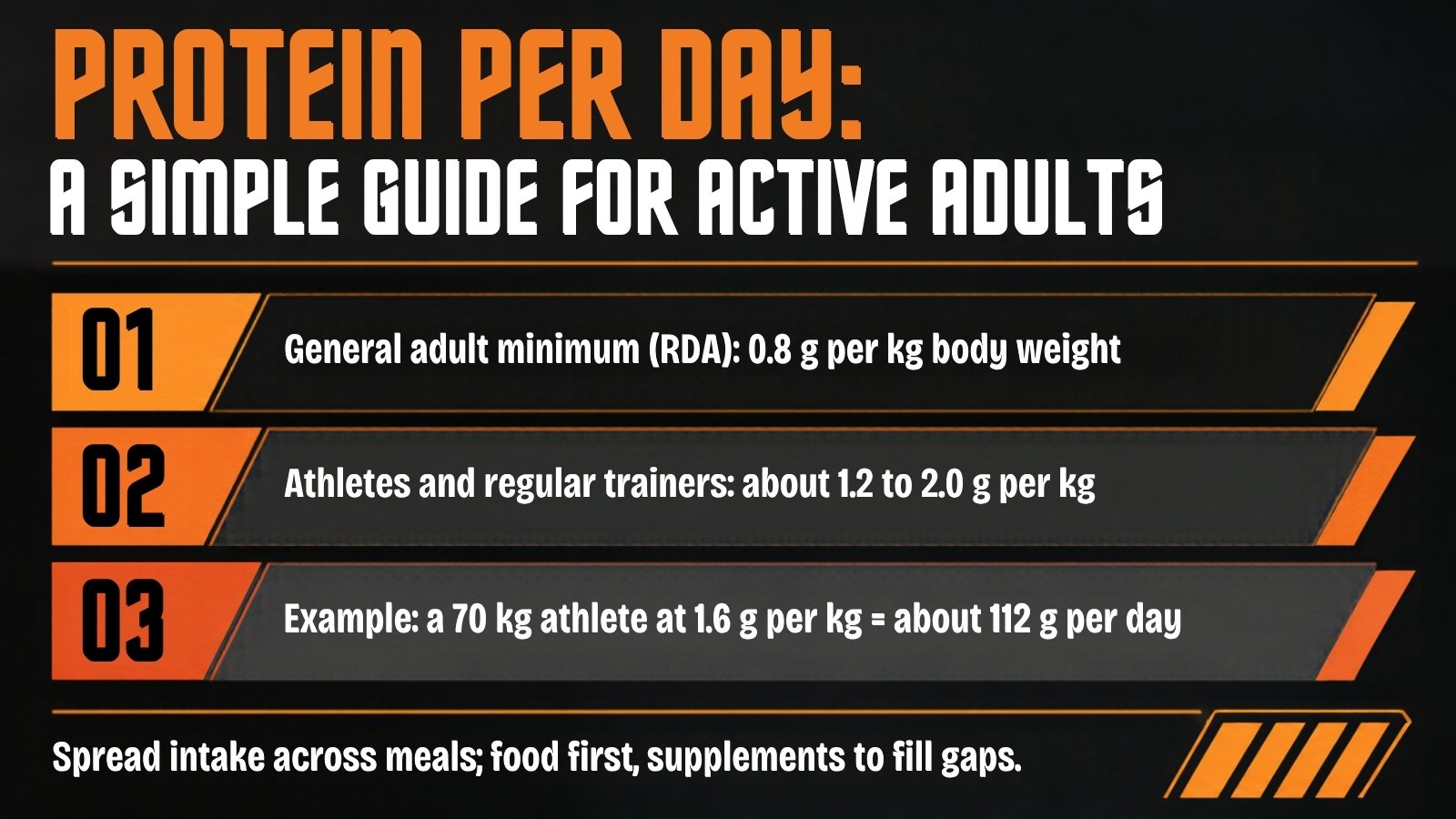
For most adults, the general Recommended Dietary Allowance is 0.8 grams of protein per kilogram of body weight per day, a level set to meet basic needs. People who train regularly usually need more. The NIH Office of Dietary Supplements fact sheet on dietary supplements for exercise and athletic performance notes that athletes typically need about 1.2 to 2.0 grams of protein per kilogram of body weight per day, alongside enough calories, carbohydrates, fats, vitamins, minerals and fluids.
For a 70 kg athlete aiming for 1.6 g per kg, that works out to about 112 grams of protein per day. Spreading protein across several meals and snacks, rather than loading it into one sitting, is a practical approach many sports nutrition experts recommend.
The same fact sheet makes an important point: supplements may help some people only when they add to, rather than replace, a nutritionally adequate diet. Food comes first; powders and bars fill gaps.
Signs Your Protein Intake May Be Too Low
Falling short on protein does not always produce obvious symptoms, but some patterns are worth noticing. Slow progress despite consistent training, frequent soreness that lingers, feeling hungry soon after meals, or losing strength during a diet can all suggest that protein, total calories or recovery need attention. Tracking your intake for a few typical days is a quick way to check. Many people who think they eat plenty of protein discover they fall well below their target on busy days.
Where Peptides Already Show Up in Your Supplements
Here is something many gym-goers do not realise: you may already be consuming peptides on purpose. Several common supplement ingredients are partly broken-down proteins.
Whey protein hydrolysate. Whey that has been partially broken down into peptides. Marketed as faster-digesting. It is still a protein supplement, just pre-digested to a degree.
Collagen peptides. Hydrolyzed collagen sold for skin and joints. Collagen is an incomplete protein, low in the essential amino acid tryptophan, so it is not a substitute for complete protein sources for building muscle.
Other hydrolysates. Plant and casein hydrolysates also exist and work the same basic way.
These food-derived peptides are digested like other protein. They are very different from the injectable “gym peptides” discussed next.
What Are “Gym Peptides”?
When people at the gym talk about “peptides,” they usually mean injectable compounds sold online for recovery, fat loss, muscle growth or anti-aging. Names you may hear include BPC-157, TB-500, CJC-1295, ipamorelin and others. These are signalling molecules, not nutrition. They are claimed to affect healing, growth hormone release or metabolism directly.
The problem is the evidence and the regulation. Many of these compounds have mostly laboratory and animal data, with limited or no high-quality human trials. Many are sold as “research chemicals” or “for research use only,” meaning they are not approved for human use and have no verified quality standards. The Peptides Blog’s review of how little human trial data exists for BPC-157 is a sobering read for anyone considering it.
Peptide vs Protein: Side-by-Side for Athletes
| Factor | Dietary protein | Injectable gym peptides |
|---|---|---|
| What it is | Food or supplement nutrient | Signalling compounds, often unapproved |
| How it is taken | Eaten | Usually injected |
| Human evidence for training goals | Strong and consistent | Limited, often lab and animal only |
| Quality oversight | Food or supplement rules; third-party testing available | Often none for human use |
| Sport status | Allowed | Many banned at all times |
| Main risks | Low for most healthy people at normal intakes | Contamination, unknown dosing, infection, unknown long-term effects |
Anti-Doping Rules: What Every Competitor Should Know
If you compete in any tested sport, this section matters more than anything else in this article. The World Anti-Doping Agency publishes an annual Prohibited List that applies across Olympic sports and many professional and amateur federations.
Two parts of that list are directly relevant to peptides. The S0 category, “non-approved substances,” bans at all times any pharmacological substance without current approval by a government health authority for human therapeutic use. Since 2022, the list has explicitly named BPC-157 as an example in this category. The S2 category bans peptide hormones, growth factors, related substances and mimetics at all times, both in and out of competition. You can read the full text of an earlier version, for example, in the 2022 Prohibited List published through UNESCO, since UNESCO’s anti-doping convention adopts the list.
Athletes are responsible for anything found in their body, regardless of how it got there. A product labelled as a harmless recovery aid that contains a prohibited substance can still lead to a ban. If you are tested, check every product against your sport’s rules and use certified, tested supplements.
Real Risks of Unregulated Injectable Peptides
Even outside competitive sport, unregulated injectable peptides carry serious risks.
You may not get what the label says. Without regulated manufacturing, there is no guarantee of identity, purity or dose.
Injection risks. Non-sterile products or poor injection technique can cause infections and abscesses.
Immune reactions. Regulators have raised concerns about immune responses and impurities with certain peptides.
Unknown long-term effects. Compounds affecting growth signals have not been studied for long-term safety in people.
Legal and supply issues. Many of these products sit in a legal grey area or are sold in breach of drug regulations.
Spotting Hype in the Locker Room and Online
Peptide marketing in fitness spaces often follows the same pattern: a famous name or a striking transformation, vague talk of “research,” and a discount code. The Peptides Blog’s look at how influencer peptide claims compare with the evidence shows how often these stories outrun the data. A useful rule: if someone selling the product is also the main source of evidence for it, look elsewhere before deciding.
Evidence-Based Ways to Recover and Build Muscle
The good news is that the most effective tools for building muscle and recovering well are legal, cheap and backed by decades of research.
Progressive training. Gradually increasing load, volume or difficulty over time is the core driver of strength and muscle gain.
Enough protein and total calories. Hit a daily protein target suited to your training, from a variety of foods.
Sleep. Most adults need seven or more hours. Sleep is when much of recovery and adaptation happens, and short sleep can blunt both performance and motivation to train.
Rest days and deloads. Planned lighter periods reduce injury risk and help long-term progress over months and years.
Creatine monohydrate. One of the best-studied supplements, shown to help with short, high-intensity efforts such as weightlifting and sprinting.
Hydration and overall diet. Carbohydrates fuel hard training; fruits and vegetables supply nutrients that support recovery.
Is High Protein Safe?
For healthy adults, protein intakes within the ranges commonly recommended for athletes are generally considered safe. People with existing kidney disease are a different case and may need to limit protein under medical guidance. Very high intakes from supplements can also crowd out other important foods, such as fruits, vegetables and whole grains, so balance matters. If you have a medical condition or take regular medicines, check with a doctor or registered dietitian before sharply increasing your protein intake.
Where Approved Peptide Medicines Fit
Not every peptide is a gym gamble. Prescription peptide medicines, such as GLP-1 based drugs used for diabetes and weight management, are approved and backed by large human trials for specific uses. Some gym members use them under medical supervision. One practical issue for people who train: rapid weight loss can include some loss of lean muscle as well as fat. Resistance training and adequate protein intake are widely recommended to help preserve muscle during weight loss, whatever its cause. That is a good example of how evidence-based training and nutrition complement approved medicines rather than being replaced by them.
Special Considerations for Older Lifters and Women
As people age, muscle tends to become less responsive to protein and training, a phenomenon sometimes called anabolic resistance. Older adults may benefit from slightly higher protein intakes and particularly from regular resistance training, which is one of the most effective ways to maintain strength and independence with age. Women have the same basic protein needs per kilogram of body weight as men with similar training, and can build strength and muscle effectively with consistent resistance training. Specific needs during pregnancy or breastfeeding should be discussed with a healthcare provider.
Choosing a Protein Supplement Wisely
If you use protein powder, a few checks help. Look for a clear statement of grams of protein per serving. Prefer products with third-party testing certification, especially if you compete. Check for added sugars and unfamiliar “proprietary blends.” Choose complete proteins such as whey, casein, soy or blends of plant proteins for muscle-building goals. And remember that a powder is a convenience, not a requirement.
Building a High-Protein Day Without Supplements
Hitting a protein target is easier than many people think. A day might include eggs or Greek yogurt at breakfast, a chicken, tuna, tofu or bean-based lunch, a dairy or soy snack, and a dinner built around fish, lean meat, lentils or tempeh. Adding milk or a soy drink, cottage cheese, nuts or seeds fills the gaps. Planning meals around a protein source first, then adding vegetables and carbohydrates, is a simple habit that makes daily targets much more achievable. Protein powders can then be used for convenience on busy days rather than as the backbone of the diet.
Questions to Ask Before Trying Any New Supplement
Before adding anything to your routine, run through a few questions. What exactly is in it, and in what amounts? Is there good human evidence that it helps with my specific goal? Has the product been independently tested for contents and contaminants? Is it allowed in my sport? Could it interact with any medicines or conditions I have? Who benefits if I buy it? If the answers are unclear, the safest choice is to wait and ask a qualified professional, such as a sports dietitian or physician.
Common Gym Myths About Peptides and Protein
“Peptides are just better protein.” No. Injectable peptides are signalling compounds, not nutrition. Food-derived peptides are simply partly digested protein.
“If it’s sold online, it must be legal.” Many products are sold for “research only” precisely because they are not approved for human use. Easy availability says nothing about safety, quality or legality.
“A little BPC-157 won’t show up in testing.” It is explicitly named on the WADA Prohibited List. Athletes are responsible for what is in their body.
“More protein is always better.” Beyond your needs, extra protein offers diminishing returns. Total diet quality matters more, and extra calories from surplus protein still count toward your energy balance.
A Note From Our Team
We care about helping people train well and stay healthy for the long haul. That means focusing on what works and being honest about what is unproven or risky. You can read more about our approach on our about page, and please review our health and fitness disclaimer before acting on any article on this site.
The Bottom Line
In the peptide vs protein debate, protein wins for almost every training goal. It is safe for most people, inexpensive, legal in sport and backed by strong evidence. Food-derived peptides like whey hydrolysate are simply a form of protein. Injectable gym peptides are a different category entirely, with limited human evidence, little quality control and real anti-doping consequences. If you want to build muscle and recover faster, train consistently, eat enough protein, sleep well and talk to a qualified professional before trying anything outside those basics.
For clear, independent explanations of peptide science and the evidence behind popular claims, explore peptide benefits and the research behind them at The Peptides Blog for evidence-minded athletes. It does not sell peptides or supplements, which keeps its focus on the research.
Frequently Asked Questions
What is the difference between a peptide and a protein?
Both are amino acid chains. Peptides are short chains, usually up to about fifty amino acids, while proteins are longer chains that fold into complex shapes. Many peptides act as signals; proteins do structural and functional work.
How much protein do I need to build muscle?
Athletes typically need about 1.2 to 2.0 grams of protein per kilogram of body weight per day, according to the NIH Office of Dietary Supplements, compared with 0.8 g per kg for general adults.
Is whey protein a peptide?
Standard whey is a protein. Whey hydrolysate has been partially broken down into peptides, but it is still digested and used like protein.
Are gym peptides like BPC-157 legal?
BPC-157 is not an FDA-approved medicine and is often sold as a research chemical. It is explicitly named on the WADA Prohibited List as a non-approved substance banned at all times in tested sport.
Do injectable peptides build muscle?
Claims are mostly based on laboratory and animal research. High-quality human evidence for muscle building is limited, and the products often lack quality control.
What is the safest way to improve recovery?
Adequate sleep, sufficient protein and calories, sensible training load with rest days, hydration and, for some, well-studied supplements such as creatine.
Fitness and health disclaimer
This article is general educational information about nutrition and training. It is not medical, nutritional or legal advice and does not endorse any product, peptide or supplement. Individual protein needs vary with age, health status and activity.
Injectable peptides should never be used without a prescription from a licensed clinician. Products labelled for research use are not approved for human use. Competitive athletes must follow the anti-doping rules of their sport. Talk to a doctor or registered dietitian before making significant changes to your diet, supplements or training, especially if you have a medical condition.